
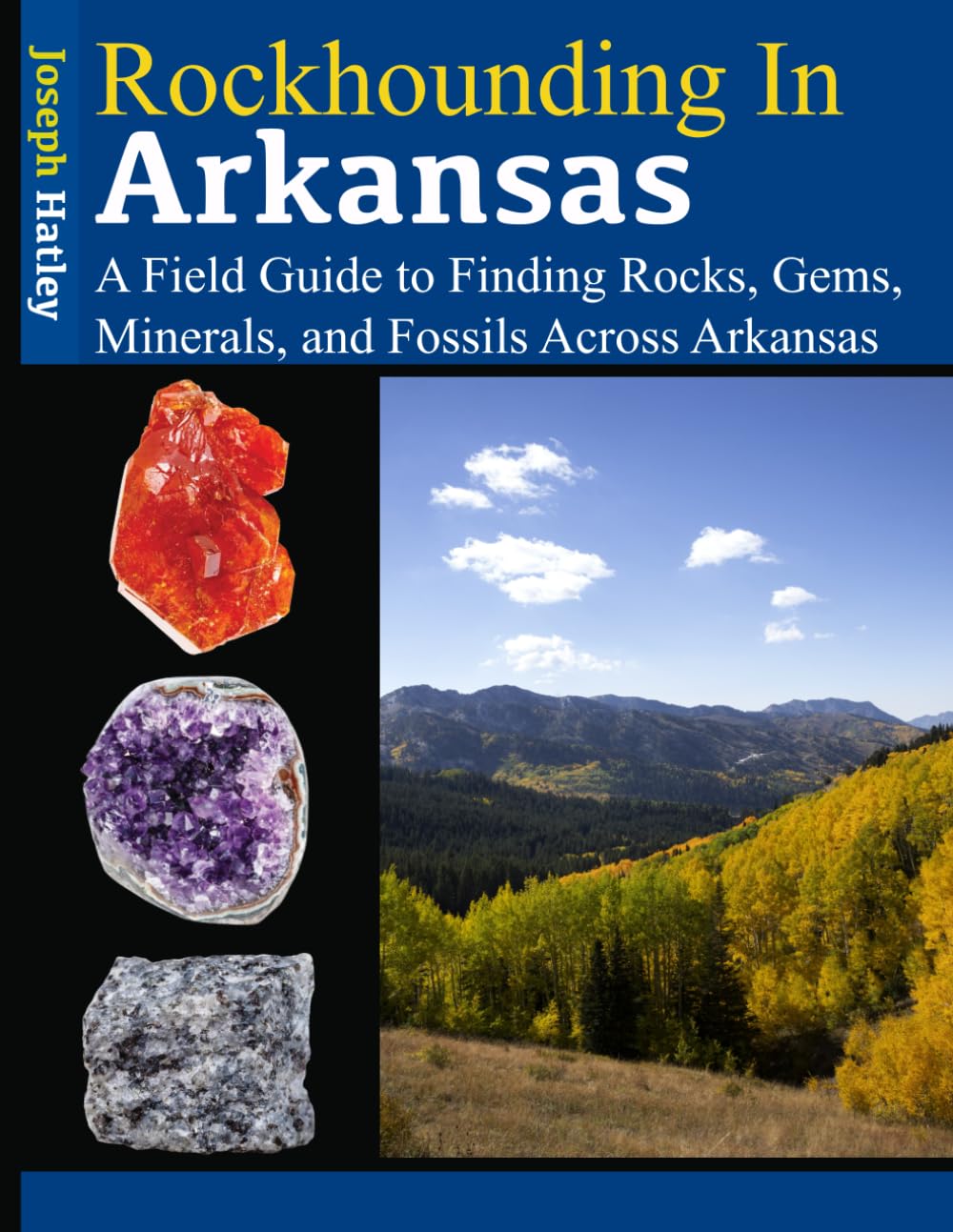
Rockhounding in Arkansas: A Field Guide to Finding Rocks, Gems, Minerals, and Fossils Across Arkansas Paperback – March 4, 2026
Product details
| Management number | 220064679 | Release Date | 2026/05/03 | List Price | US$8.80 | Model Number | 220064679 | ||
|---|---|---|---|---|---|---|---|---|---|
| Category | |||||||||
A Field Guide to the Identification and Collection of Rocks Across ArkansasArkansas occupies a geologic crossroads where folded mountain belts, uplifted plateaus, river valleys, and coastal plain sediments meet within a compact but varied landscape. The Ouachita Mountains preserve tightly folded and faulted Paleozoic sandstones and shales formed in a deep marine basin and later compressed during continental collision. To the north, the Ozark Plateaus expose thick limestone and dolostone sequences layered with chert, shaped by long erosion and groundwater dissolution. Between them lies the Arkansas River Valley, while the Gulf Coastal Plain records younger sediments and the diamond-bearing lamproite intrusion near Murfreesboro.Within this framework, Arkansas offers one of the most diverse mineral environments in the central United States. The state is best known for its quartz crystal deposits, particularly in the Mount Ida region, where hydrothermal veins cut through folded Ouachita strata and produce clear points, clusters, twins, and drusy coatings. Beyond quartz, collectors encounter novaculite ridges of dense, fine-grained silica long valued as toolstone, agate and jasper in weathered outcrops and stream gravels, petrified wood, and wavellite clusters in phosphate-rich zones. Historic mining districts yield barite, sphalerite, and galena tied to Mississippi Valley type mineralization. Fossil-bearing limestones of the Ozarks preserve brachiopods, crinoids, and bryozoans from ancient inland seas.This guide is written for collectors and field observers who value practical knowledge and careful selection. Arkansas terrain demands preparation and patience. Forested slopes conceal vein exposures, clay soils retain moisture, and summer heat requires discipline. Success depends on reading float along hillsides, tracing quartz fragments upslope to their source, recognizing iron-stained alteration zones, and understanding how drainage concentrates durable material in gravel bars and creek beds.Clear explanations of regional structure and mineral formation are tied directly to field recognition. Ouachita folding created fractures that carried silica-rich fluids and deposited quartz. Carbonate host rocks in the Ozarks favored lead and zinc concentration. Lamproite intrusion transported diamonds from mantle depth to surface exposure, while karst processes govern the weathering of limestone and the release of fossils.Identification profiles emphasize hardness, cleavage, fracture, luster, streak, crystal habit, and geologic occurrence, with notes addressing common field misidentifications. Regional overviews outline collecting conditions across the Ouachitas, Ozarks, River Valley, and Coastal Plain, along with responsible practices on public and private land.Arkansas rewards patience. Its crystals form along narrow veins, its fossils weather from limestone ledges, and its diamonds surface in cultivated soil after rain. Careful excavation, proper backfilling, and respect for land access ensure these resources remain available to future collectors. Weather patterns, seasonal stream flow, and fresh ground disturbance often determine success as much as location. This field guide serves as a steady companion in that landscape, encouraging informed collecting, disciplined field habits, and lasting respect for the state’s enduring geologic record. Read more
| ISBN13 | 979-8250693295 |
|---|---|
| Language | English |
| Publisher | Independently published |
| Dimensions | 8.5 x 0.28 x 11 inches |
| Item Weight | 13.1 ounces |
| Print length | 120 pages |
| Publication date | March 4, 2026 |
Bestseller ranking
Mineralogy



Customers who viewed this product also viewed
Cycling





Correction of product information
If you notice any omissions or errors in the product information on this page, please use the correction request form below.
Correction Request Form